.png)

Cohere has released Command A+, its most capable large language model to date, as a free open-weight model. The release is aimed squarely at enterprise and government teams that want lower-latency deployment, full weight access, and less dependency on closed model APIs.
Command A+ is built as a mixture-of-experts model, and Cohere says it runs about 2x faster than its prior releases while improving accuracy and latency. For infra teams, that combination matters more than raw parameter count: a sparse MoE can keep serving costs and tail latency materially lower than a dense model of similar capability, especially when the workload is dominated by short interactive turns or tool-calling agents.
The practical question is not whether the model is “powerful” in the abstract. It is whether its throughput, memory footprint, and routing behavior line up with the serving envelope you actually run in production. If Cohere’s speed claims hold under your prompt distribution, Command A+ is the kind of release that can shift a model from “interesting for evals” to “economically viable for internal rollout.”
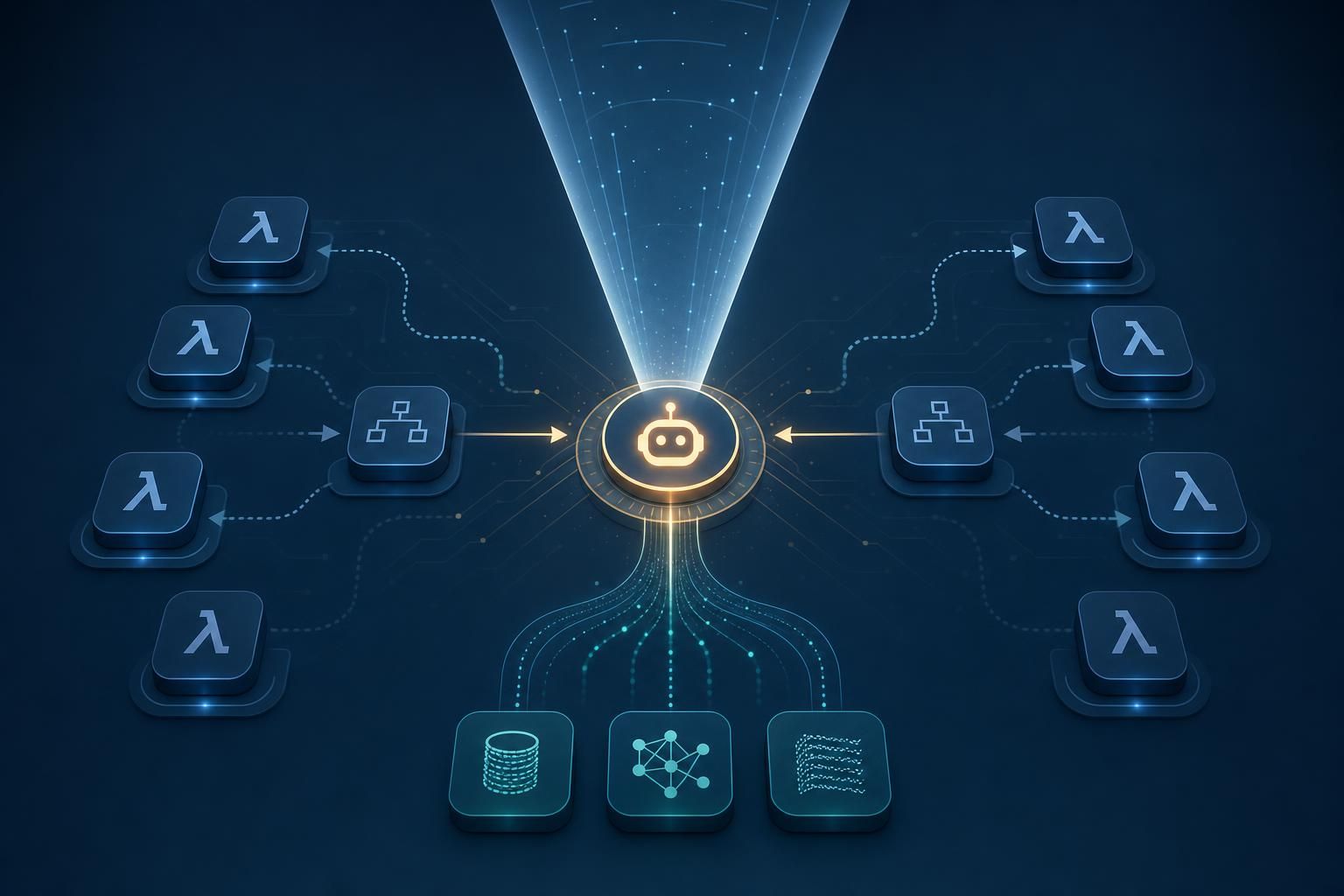
Command A+ is specifically trained for conversational tool use, and Cohere published implementation guidance plus a Hugging Face model card indicating support via chat templates in Transformers. That makes the release immediately relevant for agent systems that need structured calls into APIs, databases, or search.
For teams building on top of existing orchestration stacks, the main evaluation axis is not just tool-call correctness. It is schema adherence under long context, recovery from partial tool failures, and whether the model degrades gracefully when the tool result is noisy or incomplete. If the model’s tool-use training actually reduces prompt brittleness, it can simplify agent prompts and shrink the amount of wrapper logic needed around function calling.
Cohere is positioning Command A+ as a “people-owned” alternative to the dominant open model ecosystem, explicitly contrasting itself with Chinese releases like Qwen and DeepSeek and with the more limited openness of US frontier vendors. That framing is political, but the engineering implication is straightforward: full weight access changes your control surface.
For enterprises, open weights reduce lock-in in ways that matter operationally. You can run private evaluations, fine-tune or adapt the model without API constraints, inspect behavior across versions, and keep a stable serving target even if a vendor changes pricing or policy. For regulated buyers, that also improves the story around data handling, deployment locality, and long-term model continuity.
The catch is that open weights are only useful if the surrounding package is real: documentation, reproducible loading paths, licensing clarity, and enough benchmark provenance to trust the model in your own eval harness. Cohere appears to be shipping the right ingredients here, but the burden still shifts to the adopter to validate safety, accuracy, and operational fit on their own workload.
If you are considering Command A+ for production, the first pass should look like any other serious model adoption process: compare it against your incumbent on task-specific evals, tool-call success rate, latency at target concurrency, and cost per successful request. Open-source packaging lowers the barrier to adoption, but it does not remove the need for workload-specific testing.
I would especially want to see results on long-context enterprise prompts, multilingual retrieval-heavy tasks, and agent loops with repeated tool invocation. Those are the places where sparse routing, conversation tuning, and open-weight deployment can either pay off or expose hidden weaknesses. If Command A+ holds up there, Cohere has delivered something more important than a symbolic open-source release: a credible enterprise model that teams can actually own end to end.