.png)

Hugging Face announced a faster Transformers modeling backend inside vLLM, and the key message is simple: models defined in transformers can now run in vLLM with native-speed performance without porting model code. The new path is exposed through --model-impl transformers and is positioned as a drop-in option for existing vLLM serving setups.
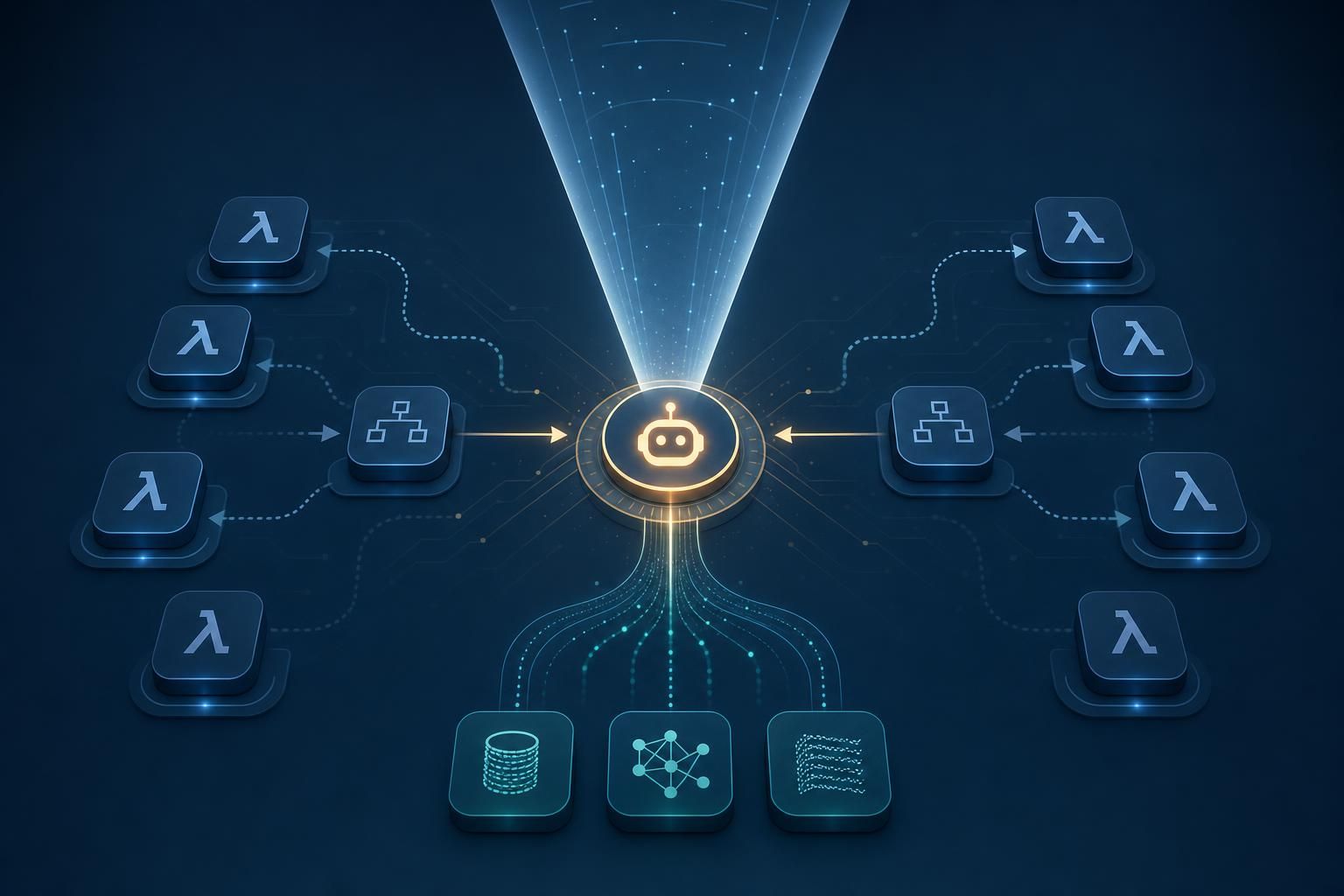
The practical change is that vLLM can now execute Hugging Face model implementations directly while still using its own serving stack for batching, scheduling, and kernel-level optimizations. In other words, the modeling code comes from transformers, while inference behavior still comes from vLLM.
That matters because it removes one of the most expensive parts of adopting a new architecture in production: hand-porting the forward pass into a second framework just to get serving-grade performance. If a model already exists in transformers, the backend can load it as-is.
The upgrade path is also straightforward:
uv pip install --upgrade vllm --torch-backend auto
And serving uses the same vllm serve entrypoint with a single implementation switch:
# Qwen3-4B dense, single GPU
vllm serve Qwen/Qwen3-4B --model-impl transformers

# Qwen3-32B dense, tensor-parallel across 2 GPUs
vllm serve Qwen/Qwen3-32B --model-impl transformers --tensor-parallel-size 2

# Qwen3-235B-A22B-FP8 MoE, data-parallel + expert-parallel across 8 GPUs
vllm serve Qwen/Qwen3-235B-A22B-FP8 --model-impl transformers --data-parallel-size 2 --expert-parallel-size 4
The important part is composition: --model-impl transformers does not replace your parallelism or deployment model. It plugs into the same multi-GPU and distributed serving patterns you already use in vLLM.
Transformers has become the reference implementation layer for a large share of the ecosystem, with 450+ architectures and a design centered on readable, self-contained model code. That makes it the place where new architectures usually land first, and often the easiest place to inspect when a model behaves oddly.
vLLM has been strong on serving performance, but serving a new model family traditionally meant either waiting for a native implementation or porting the architecture into vLLM’s internal model code. This backend closes part of that gap. It lets the ecosystem keep one primary modeling source of truth while still benefiting from vLLM’s optimized runtime.
For model authors, that is the real win. A new architecture can be validated in transformers, then served in vLLM with much less friction. For platform teams, the operational benefit is that you can standardize on one serving engine without narrowing the set of models you can expose.
The announcement is not limited to small demo models. Hugging Face calls out a comparison across three Qwen3 configurations that stress different parts of the stack:
That spread is useful because it tests the backend where inference engines usually diverge: single-device latency, multi-device throughput, and complex MoE routing at scale. The claim is that the transformers backend now reaches native-speed behavior in vLLM across these cases, not just in a narrow “it runs” sense.
For production engineers, that suggests the backend is no longer just a compatibility layer. It is meant to be a serious execution path for real deployment topologies, including the large distributed systems where vLLM is usually evaluated against hand-written model implementations.
The remaining question is model-by-model performance parity. For architectures that are already heavily optimized in vLLM’s native path, you still want to benchmark the transformers backend against your exact latency and throughput targets. The promise here is compatibility and near-native speed, not automatic superiority in every workload.
The upgrade surface is small, so the evaluation burden shifts to measurement rather than integration. In practice, I would test three things before swapping a production model over:
First, functional parity on your prompt and decoding mix. Backend changes can expose differences in processor behavior, special-token handling, or edge-case model logic, especially when you are dealing with multimodal models or less common architectures.
Second, throughput under your real concurrency and batching pattern. The point of vLLM is not just raw model execution speed; it is system-level efficiency under load. You want to verify that the transformers backend preserves the batching behavior and parallelism you depend on.
Third, memory footprint and scaling behavior on the hardware you actually run. The examples include both dense and FP8 MoE models, which is a hint that memory layout and routing efficiency are part of the story. Benchmark on the same GPU class and topology you serve in production, not on a synthetic single-GPU setup.
For teams already standardizing on Hugging Face model releases, this backend reduces the cost of adopting vLLM as the serving layer. For teams already standardized on vLLM, it expands the set of architectures you can serve without waiting on a native port.